
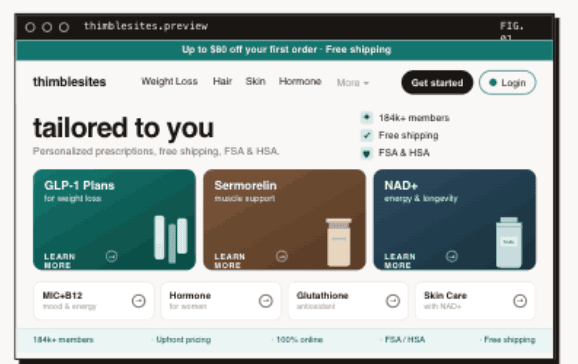
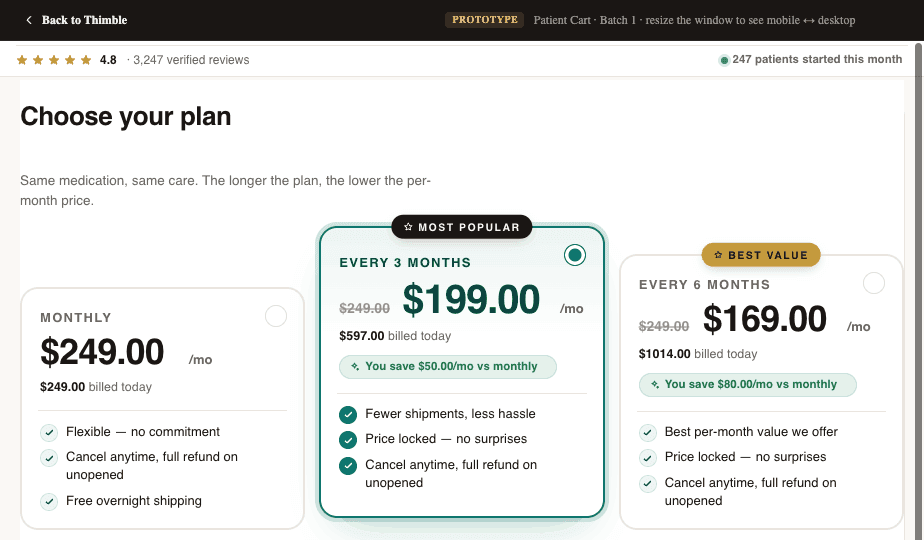
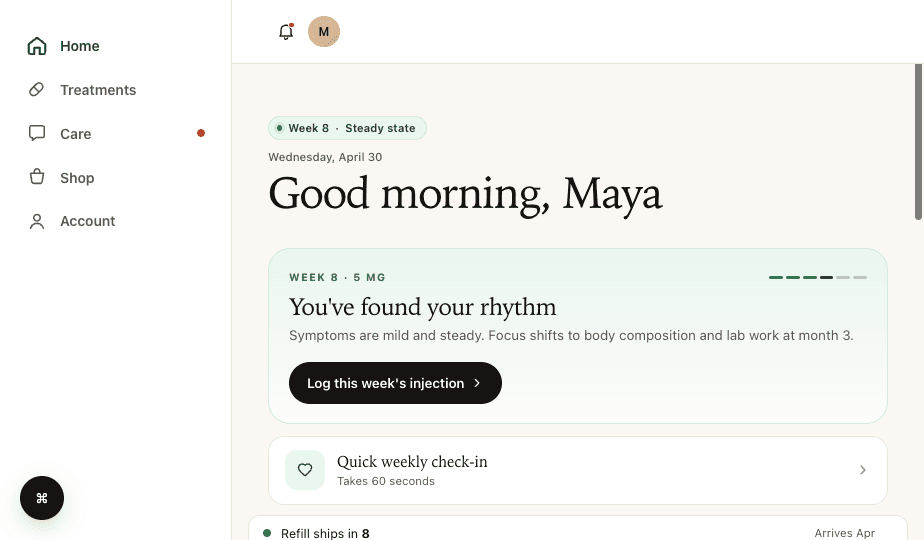

Every telehealth platform claims to be the last vendor you'll ever need. They promise one login, one contract, one bill, and the elimination of the 'integration nightmare.' The pitch is compelling because it's partially true. An all-in-one platform does simplify your tech stack on day one.
The problem is day 400. By then, you've discovered what 'one vendor' actually means: you can't switch checkout without losing your patient records. You can't switch patient records without losing your billing. You can't change provider networks without rebuilding your entire intake flow. Every piece of your business is entangled with every other piece, and the only entity that can untangle them is the vendor charging you into six figures annually.
This is vendor lock-in. It isn't accidental. It's architecture.
How Telehealth Vendors Create Lock-In
1. Proprietary Data Formats
Your patient records, treatment history, appointment data, and billing information live in the vendor's database. When you try to leave, you can't simply pick up the data and plug it into another system. Most platforms export data in proprietary formats that require significant transformation before another system can read it.
Worse, some platforms charge data export fees or delay exports for weeks when clients request them. This is a classic lock-in tactic: the data is technically yours, but retrieving it usefully requires their cooperation.
2. Bundled Services You Can't Unbundle
All-in-one platforms package checkout, patient portal, provider network, pharmacy routing, analytics, and CRM into a single offering. If their checkout is great but their provider network is mediocre, you can't switch the provider network without losing the checkout. The bundling means every weakness in the platform becomes your weakness permanently.
3. Centralized Payment Processing
Most platforms process payments through their own merchant account or Stripe account. Your customer payment methods, subscription history, and billing relationships live in the vendor's Stripe dashboard, not yours. If you leave, patients have to re-enter payment information. Subscription continuity breaks. Revenue attribution data disappears. Churn spikes during the migration.
4. Proprietary Workflows
Once your staff is trained on a platform's specific interface, terminology, and workflow patterns, switching platforms requires retraining everyone. For a 20-person clinic, that's 20 people losing productivity for weeks. This isn't technical lock-in; it's human lock-in. And it's real.
5. Multi-Year Contracts with Exit Fees
Enterprise telehealth contracts routinely include 2-3 year terms with early termination penalties. Some include 'data retrieval fees' that must be paid to get your own records out. Some include automatic renewal clauses with narrow cancellation windows. These contractual mechanisms lock you in even when you've decided to leave.
6. API Limitations
Many platforms offer APIs that are technically functional but practically limited. You can read some data but not all of it. You can update certain fields but not others. You can trigger specific workflows but not customize them. The platform controls what you can do with your own data, which means they control whether migration is feasible.
What Lock-In Actually Costs You
- Price increases: Locked-in customers have no leverage. Renewal pricing reflects the vendor's awareness that you can't easily leave
- Slow feature delivery: Platforms without competitive pressure slow-walk feature development. Your roadmap is their roadmap
- Operational compromises: You end up accepting workflows and limitations that don't fit your business because changing them would require switching platforms
- Innovation taxes: New technologies emerge; your platform lags. You can't adopt better tools because they don't integrate
- Strategic paralysis: Major business decisions get filtered through 'will this require a platform migration?' Your platform constrains your strategy instead of enabling it
How to Build a Stack You Own
The alternative to all-in-one lock-in isn't DIY chaos. It's modular architecture. Each component of your telehealth stack is independently swappable, connected through standard interfaces, and owned by you.
1. Choose Modular Components
Instead of one platform that does everything, choose purpose-built components for each layer of your stack. A checkout platform that does checkout well. A patient portal that does patient experience well. A provider network that you can swap if needed. Each component has a clear, limited scope and plays well with others.
2. Own Your Payment Infrastructure
Your Stripe account should belong to your company, not your platform vendor. When you own the Stripe account, your customer payment methods, subscription history, and billing relationships are portable. If you ever change platforms, your patients don't even notice.
3. Insist on Clean Data Ownership
Before signing any contract, ask: 'In what format can I export all of my data, how quickly, and at what cost?' A platform with clean data ownership policies will have a clear answer. A platform that hedges is a lock-in risk.
4. Use Standard Interfaces Where Possible
Standards like FHIR for health records, HL7 for messaging, and webhook-based integrations for workflow triggers make it possible to swap components without rebuilding. Platforms that use standard interfaces are significantly easier to leave than platforms with proprietary APIs.
5. Negotiate Contract Terms Aggressively
- Annual contracts, not multi-year: Keeps your leverage intact
- No automatic renewal without explicit opt-in: Forces a conversation at each renewal
- Data portability clauses: Contractually require clean data export in standard formats
- Exit assistance provisions: Some platforms will provide migration support; negotiate this upfront
- Reasonable termination clauses: 30-60 day notice periods without penalties
The Modular Stack Architecture
A well-designed modular telehealth stack typically has five layers. Each layer is independently swappable:
- 01.Marketing site: Your brand, your content, your hosting. Connects to checkout via standard embeds or redirects
- 02.Checkout and intake: Handles intake forms, payment processing, and patient provisioning. Should connect to multiple provider networks
- 03.Provider network: Clinical layer, swappable if credentialing or availability becomes a bottleneck
- 04.Patient portal and operations: Patient experience, CRM, analytics, automation. The layer that drives retention
- 05.Data and integrations: Your EHR, pharmacy integrations, analytics tools. Should be independently replaceable
Red Flags That Indicate Lock-In Risk
- Vague data export policies: If the vendor can't show you exactly how data export works, assume it's difficult by design
- Refusal to sign annual contracts: Multi-year requirements are lock-in tactics
- Centralized payment processing: Platforms that control your Stripe account control your revenue portability
- Proprietary API limitations: If you can't access all of your data through the API, you can't migrate
- No customer references with completed migrations: Ask for references from clients who have left the platform. Platforms without such references often have lock-in problems
- Feature roadmaps behind paywalls or NDAs: If you can't see where the platform is heading, you can't evaluate whether it fits your direction
How Thimble Hub Addresses Lock-In
We built Thimble Hub specifically to avoid the lock-in traps that define the all-in-one category. Per-company Stripe accounts mean your billing relationships belong to you. Standard webhook interfaces mean every component is independently integrable. Annual contracts with transparent pricing mean you keep negotiating leverage. And direct access to our engineering team means custom integrations happen in days, not quarters.
This isn't because we're naive about business strategy. It's because we believe platforms that keep customers by being good have higher retention than platforms that keep customers by being difficult to leave. And we'd rather compete on being good.
Frequently Asked Questions
- What is telehealth vendor lock-in?
- Vendor lock-in is when a customer becomes so dependent on a specific vendor that switching to an alternative is prohibitively expensive or disruptive. In telehealth, lock-in typically comes from proprietary data formats, bundled services, centralized payment processing, and multi-year contracts with exit penalties.
- How do I know if my current telehealth platform has lock-in risk?
- Ask these questions: Do I own the Stripe account that processes my payments? Can I export all of my data in a standard format, immediately, without fees? Am I on an annual or multi-year contract? Can I swap individual components (like the provider network) without replacing the entire platform? If the answers suggest lock-in, you have a migration risk.
- Is modular architecture more expensive than all-in-one?
- On the invoice, often slightly more. In total cost of ownership, usually less. Modular architecture preserves your negotiating leverage, reduces the risk of sudden price increases, and eliminates the massive cost of platform migrations when an all-in-one vendor stops meeting your needs.
- What should I look for in a telehealth vendor contract?
- Annual terms rather than multi-year. Clear data ownership and export provisions. No automatic renewal without explicit opt-in. Reasonable termination notice periods. Per-company payment infrastructure. API access to all of your data, not just a subset.
- Can I really migrate from an all-in-one platform without losing patients?
- Yes, if you plan the migration carefully. The key is maintaining payment continuity (which requires owning your Stripe account), communicating clearly with patients, and running the new system in parallel before full cutover. Platforms with clean data ownership and standard interfaces make this significantly easier.
Building a telehealth brand?
Thimble Hub gives you the checkout, intake, patient portal, and EHR-routing infrastructure so you can launch in weeks, not quarters. Modular, HIPAA-ready, no lock-in.