
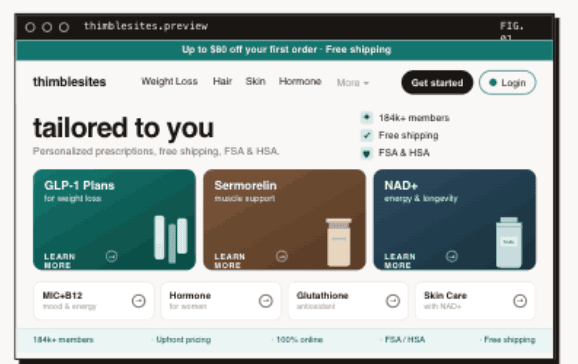
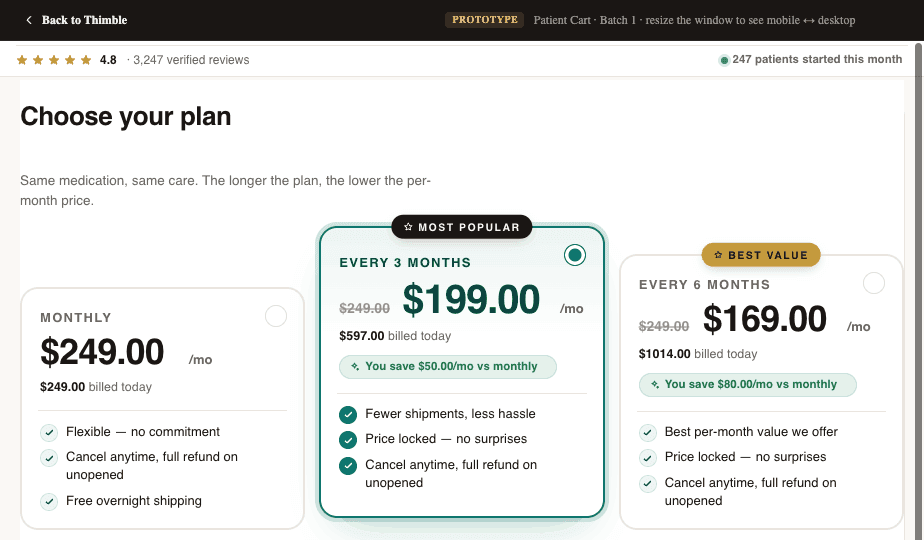
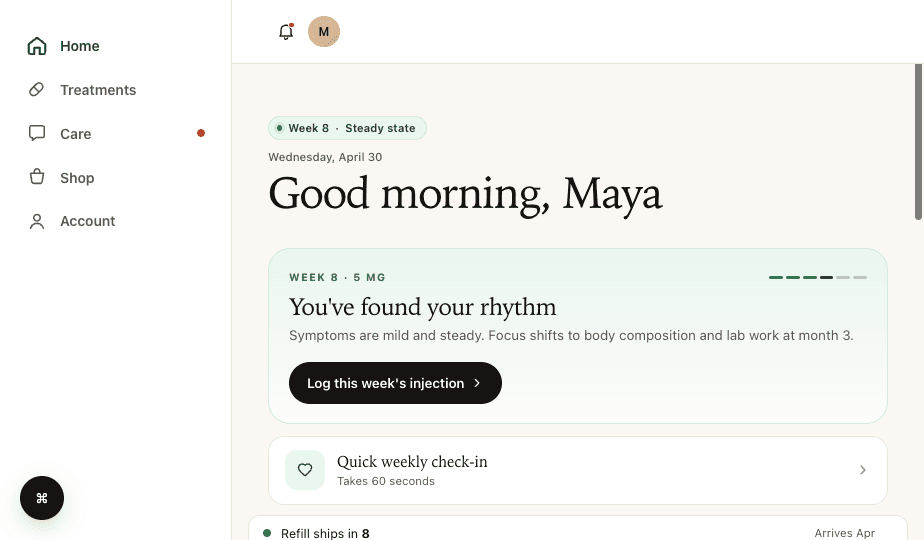

The FDA's peptide crackdown of 2024-2025 wiped out the core product offering of dozens of DTC longevity companies overnight. BPC-157, TB-500, Thymosin Alpha-1, AOD-9604, CJC-1295, Ipamorelin: all effectively banned from compounding. The companies that built their business around these peptides had to pivot or shut down.
But the consumer demand for longevity prescriptions didn't disappear. It shifted. Rapamycin, metformin, NAD+, sermorelin (the last standing growth hormone peptide), and low-dose naltrexone became the new core stack. The market is smaller but better defined, and the brands that survived the crackdown are building on more durable regulatory ground.
The DTC longevity prescriptions market is one of the fastest-growing DTC Rx verticals by percentage, driven by influencer awareness (Peter Attia, Andrew Huberman, Bryan Johnson), an aging population willing to pay for healthspan, and a growing body of clinical evidence.
What's Still Legal: The 2026 Longevity Formulary
Rapamycin (Sirolimus): The Core of Rapamycin Telehealth
FDA-approved since 1999 for organ transplant immunosuppression. Prescribed off-label at low doses (1-6mg weekly or biweekly) for longevity based on the most consistent lifespan extension data in animal models. Not a controlled substance. Available as a generic. Prescribable via telehealth.
The PEARL trial (Participatory Evaluation of Aging with Rapamycin for Longevity), partly run by AgelessRx, published its one-year results in April 2025 in the journal Aging. Price: $100-200/month through DTC platforms including consultation.
Metformin
FDA-approved for Type 2 diabetes. Off-label for longevity based on epidemiological data and the ongoing TAME trial (largely privately funded through AFAR and private donors, with some NIH contribution; results expected 2027-2028). Generic, extremely cheap ($4-10/month at retail pharmacy). The DTC value proposition is the clinical context, monitoring, and bundling, not the medication itself.
NAD+ (Injectable)
Compoundable substance for subcutaneous injection. Not FDA-approved as a finished drug product, but available from compounding pharmacies. The FDA has not specifically targeted NAD+ compounding as of early 2026, though the broader compounding crackdown creates uncertainty. Price: $150-400/month through DTC platforms.
Sermorelin
The last standing growth hormone-related peptide that's legal to compound. Previously FDA-approved (commercial product discontinued, but the substance remains compoundable). Stimulates natural growth hormone release. Used for recovery, body composition, and anti-aging. Price: $200-400/month.
Low-Dose Naltrexone (LDN)
Naltrexone is FDA-approved for opioid/alcohol dependence at 50mg. At low doses (1-4.5mg), it's used off-label for immune modulation, inflammation reduction, and chronic pain. Compounded by 503A pharmacies. Growing evidence base. Non-controlled. Price: $30-60/month.
What's Banned or Restricted
- BPC-157: Effectively banned from compounding (not on FDA approved compounding list)
- TB-500 (Thymosin Beta-4): Restricted from compounding
- Thymosin Alpha-1: Restricted from compounding
- CJC-1295, Ipamorelin: Not approved for compounding
- AOD-9604: Not approved for compounding
- PT-141 (compounded): Restricted (FDA-approved brand Vyleesi exists but for different indication)
- Epithalon: Never approved for compounding; gray market only
The Competitive Landscape
- AgelessRx: Pioneer DTC longevity prescriptions. Rapamycin, NAD+, metformin. Also runs the PEARL clinical trial. Strong clinical credibility.
- Healthspan: Rapamycin-focused DTC. Growing.
- Maximus: Started in TRT, expanded into longevity. Overlaps with men's health optimization.
- Lifeforce: Premium longevity diagnostics + prescriptions + coaching. $200-300/month programs.
- Marek Health: Hormone optimization + longevity. Popular in biohacker community.
- Defy Medical: Established telemedicine for TRT + peptides + longevity. Florida-based.
No brand dominates. The market is fragmented among small, often bootstrapped companies that were built before the peptide crackdown and survived by pivoting. A well-branded, well-equipped new entrant can compete immediately.
Who Launches Longevity Brands
- Physicians with longevity practices who want to scale beyond their local patient base via telehealth. They have the clinical expertise and protocols. They need the commerce and patient management infrastructure.
- Health and wellness influencers with audiences interested in optimization. Peter Attia, Andrew Huberman, and Bryan Johnson have normalized longevity prescriptions for millions of consumers. Influencers with smaller but engaged audiences can build DTC longevity brands.
- Functional medicine practices expanding into longevity. The overlap between functional medicine and longevity medicine is significant. Practices already prescribing compounded medications can add rapamycin and metformin to their formulary.
- Compounding pharmacies that supplied peptides before the crackdown and need to redirect capacity. They have the compounding expertise for NAD+, sermorelin, and LDN. They need patient-facing DTC infrastructure.
Building a Longevity Brand on Infrastructure
The Core Stack: Rapamycin + Metformin + NAD+
These three products form the foundation of most longevity protocols in 2026. Rapamycin for mTOR inhibition. Metformin for metabolic health and AMPK activation. NAD+ for cellular energy and DNA repair. Together, they represent a $200-500/month subscription depending on dosing and bundling.
Add-Ons: Sermorelin, LDN, and Diagnostics
Sermorelin for growth hormone optimization ($200-400/month additional). LDN for inflammation and immune modulation ($30-60/month). Comprehensive biomarker panels ($200-500 per panel, 2-4x per year) that track the patient's biological age, inflammation markers, metabolic health, and hormone levels. The diagnostics are both a clinical requirement and a retention driver. Patients who see their biomarkers improving stay longer.
The High-Touch Clinical Model
Longevity is not a simple prescribe-and-ship vertical like ED or skincare. Patients expect detailed consultations, biomarker interpretation, protocol adjustments, and ongoing clinical engagement. The automation engine handles the operational scaffolding (lab reminders, refill cycles, follow-up scheduling), but the provider relationship needs to be real and substantive.
Unit Economics
- Average monthly subscription: $200-500/month (core stack + add-ons)
- Cost of goods: $40-120/month (rapamycin generic is cheap; NAD+ and sermorelin are expensive to compound)
- Provider cost: $40-80 per consultation (longevity consultations require more time than ED or skincare reviews)
- Lab costs: $150-400 per comprehensive panel, 2-4x per year
- Customer acquisition cost: $200-500 (higher than other verticals, but consumers are high-intent and high-willingness-to-pay)
- Average customer lifetime: 12-36 months (longevity patients are committed and high-engagement)
- LTV potential: $3,000-$15,000+ per patient
The Regulatory Reality
- Off-label prescribing is legal but carries specific risks. You cannot advertise rapamycin as 'extending lifespan' or metformin as 'anti-aging' in promotional materials. The FDA and FTC monitor health claims. Your content should educate about the research without making specific therapeutic claims.
- The evidence base is thin compared to established therapeutic areas. Rapamycin's longevity data is primarily from animal models. Metformin's longevity data is epidemiological. NAD+'s data is mechanistic. Be transparent about this with patients. Informed consent documentation should be thorough.
- Compounding pharmacy relationships matter more here than in any other vertical. NAD+ compounding quality varies significantly between pharmacies. Sermorelin stability requires careful handling. Vet your pharmacy partners rigorously.
- Products can become illegal with little notice. The FDA's peptide decisions in 2024-2025 happened on timelines of weeks, not years. Your infrastructure needs the ability to remove products from your formulary quickly and communicate changes to patients automatically.
- State-by-state prescribing rules vary for off-label medications. Some states have specific restrictions on telehealth prescribing of off-label drugs. Your compliance engine needs to track these.
Why Longevity Brand Infrastructure Matters More Here Than in Any Other DTC Rx Vertical
In ED or skincare, regulatory changes are rare and the product formulary is stable. In longevity, the regulatory environment shifts every few months. Products get banned. New research changes protocols. Compounding pharmacy availability fluctuates.
A longevity brand built on custom infrastructure has to adapt to every change manually: update intake forms, modify provider protocols, change pharmacy routing, communicate with patients, adjust billing. A brand built on prescription commerce infrastructure adapts through the platform. When the FDA restricts a peptide, the platform updates the formulary, notifies affected patients through automation, and routes providers to alternative protocols. That adaptability is the difference between surviving a regulatory shift and going out of business.
Frequently Asked Questions
- Is rapamycin legal to prescribe for longevity?
- Yes. Rapamycin (sirolimus) is FDA-approved for organ transplant immunosuppression and can be prescribed off-label for longevity by any licensed physician. It is not a controlled substance and is available as a generic. Off-label prescribing is legal and common in medicine. However, you cannot market rapamycin specifically as a longevity treatment in advertising.
- What happened to BPC-157 and other peptides in the 2024-2025 peptide crackdown?
- The FDA effectively banned BPC-157, TB-500, Thymosin Alpha-1, CJC-1295, Ipamorelin, and AOD-9604 from compounding in the 2024-2025 peptide crackdown by not placing them on the approved compounding list. Sermorelin remains legal to compound because it was previously FDA-approved as a finished drug. The peptide landscape may continue to shift as FDA rulemaking evolves, which is why longevity brand infrastructure needs to be adaptable.
- How much revenue can a DTC longevity prescriptions brand generate?
- Longevity patients are high-value: $200-500/month average subscription with 12-36 month average lifetime. A DTC longevity prescriptions brand with 500 active patients at $300/month generates $1.8 million annually. The top companies in this space are doing $15-40 million in estimated revenue with relatively small patient bases compared to men's health or skincare.
- What lab work do longevity patients need?
- Comprehensive biomarker panels typically include: CBC, CMP, lipid panel, fasting insulin, HbA1c, hsCRP, homocysteine, hormone panel (testosterone, DHEA-S, thyroid), vitamin D, B12, and sometimes advanced markers like apoB, Lp(a), and biological age clocks. Panels cost $150-400 and are typically run 2-4 times per year.
- Is the longevity market too risky for a new brand?
- The regulatory risk is real. Products can be restricted quickly. But the demand is also real and growing rapidly. The key is building on infrastructure that can adapt when regulations change, maintaining a diversified formulary (not dependent on a single product), and being transparent with patients about the evidence base. Brands built on compliant infrastructure with regulatory monitoring are well-positioned to navigate the volatility.
Building a telehealth brand?
Thimble Hub gives you the checkout, intake, patient portal, and EHR-routing infrastructure so you can launch in weeks, not quarters. Modular, HIPAA-ready, no lock-in.