

Curology pioneered the compounded prescription skincare subscription in 2014. The model is simple: patient submits photos and a skin history, a dermatology provider creates a personalized compounded formula (typically tretinoin + azelaic acid + niacinamide), the pharmacy compounds it, and it ships to the patient's door monthly. Agency (formerly Apostrophe), Musely, Dear Brightly, and Hims all run variations of the same model.
It's one of the most accessible DTC Rx verticals: no controlled substances, simple asynchronous (photo-based) telehealth, straightforward compounding, and a consumer base that already understands subscription skincare from the OTC world.
The barrier has been infrastructure. Curology raised significant venture funding and built its own compounding facility. Most new brands can't do that. Prescription commerce infrastructure changes the math entirely.
Why a DTC Prescription Skincare Brand Works as a Subscription Business
- Proven subscription model: Skincare is naturally recurring. Patients use topical treatments daily and need refills monthly. The subscription model is intuitive to consumers who already subscribe to OTC skincare products.
- Zero controlled substance complexity: Tretinoin, azelaic acid, niacinamide, hydroquinone, spironolactone: none are controlled. No DEA compliance. No Schedule restrictions. Prescribable via asynchronous telehealth in virtually every state.
- Photo-based consultations: Dermatology is the most telehealth-friendly specialty. Providers diagnose based on photos, which means fully asynchronous encounters. No video calls needed. This dramatically reduces provider costs and enables fast turnaround.
- Compounding creates differentiation: A custom-mixed formula feels personalized even when the formulation categories are limited. Patients perceive compounded skincare as premium and tailored to them, which supports $30-75/month pricing.
- Regulatory simplicity: The simplest regulatory environment of any DTC Rx vertical. The only complexity is compounding pharmacy compliance, which infrastructure can handle centrally.
The Product Categories
Anti-Aging and Acne: The Core DTC Tretinoin Subscription
The core product for most DTC skincare brands. Tretinoin (0.025-0.1%) is the gold standard for both anti-aging and acne. Compounded with complementary actives (azelaic acid 15%, niacinamide 4-5%, clindamycin 1% for acne), it becomes a custom "superbottle" that justifies a $25-50/month subscription.
Hyperpigmentation and Melasma
Hydroquinone (all strengths) became prescription-only under the CARES Act (Section 3851), effective September 2020 - all OTC hydroquinone products were banned at that point, not a subsequent FDA action. This regulatory change actually benefits DTC brands by driving consumers to telehealth for a product they previously bought OTC. Compounded melasma formulas (hydroquinone + tretinoin + azelaic acid + tranexamic acid) run $30-50/month. Musely has built a focused brand around this niche.
Hormonal Acne
Spironolactone (25-200mg oral, off-label for acne) is increasingly prescribed via DTC telehealth for women with hormonal acne. It requires periodic lab monitoring (potassium, blood pressure) but is non-controlled and has strong clinical evidence. Combining spironolactone with compounded topicals creates a comprehensive acne program at $45-80/month.
Premium Anti-Aging
Higher-end formulations incorporating prescription-strength retinoids with growth factors, peptides (topical, non-FDA-restricted), and antioxidants. Positioned at $50-100/month for consumers who want clinical-grade skincare beyond what OTC brands offer. This is the emerging premium tier that brands like Agency are targeting.
The Competitive Landscape
- Curology: Market leader. $30/month custom formula. Built its own compounding facility. Expanded into OTC products. Reports suggest profitability challenges despite scale.
- Agency (formerly Apostrophe): Premium positioning. Compounded formulas plus oral prescriptions. Rebranded to target men and women.
- Musely: Melasma/hyperpigmentation specialist. Niche but loyal customer base. FaceRx product line.
- Dear Brightly: Tretinoin-focused. Simpler product line. 'Retinoid concierge' positioning.
- Hims/Hers: Mass market. Basic tretinoin offerings. Competes on price ($25/month range). Less personalized.
The market leader (Curology) struggled with profitability because the cost of operating a custom compounding facility and engineering team is enormous. New brands on infrastructure don't carry that overhead.
How the Pipeline Works for Skincare
- 01.Photo-based intake: Patient uploads photos of their skin (front, side, close-up) and completes a skin history questionnaire. Product selection (anti-aging, acne, hyperpigmentation) and intake data flow into the system automatically.
- 02.Asynchronous provider review: A dermatology provider (MD, NP, or PA with derm training) reviews photos and history. Creates a treatment plan with specific compounding instructions. Turnaround: typically 24-48 hours.
- 03.Prescription routing: Compounded formulas route to your compounding pharmacy partner. Generic prescriptions (tretinoin tube, spironolactone tablets) route to retail pharmacy. The system handles routing based on product type.
- 04.Compounding and fulfillment: Pharmacy compounds the custom formula and ships to the patient. Tracking flows back to the platform. Patient receives branded packaging.
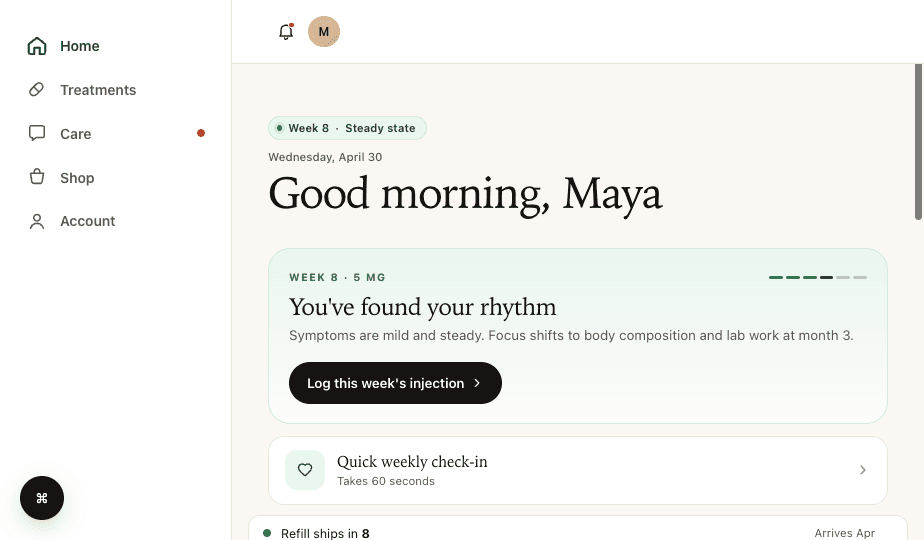
- 05.Patient portal: Branded portal where the patient tracks their skin journey, uploads progress photos, messages their provider, and manages their subscription.
- 06.Refill and follow-up: Monthly refills processed automatically. Provider check-ins at 6-week and 12-week marks (photo-based). Formula adjustments as skin improves. Upsell opportunities (add spironolactone, add a second product for body skin).
Differentiation Strategies
DTC prescription skincare has a commodity problem. Tretinoin + niacinamide + azelaic acid is functionally the same formula across most brands. Here's how to stand out:
- Niche audience: Skincare for men (underserved), skincare for darker skin tones (hyperpigmentation focus), skincare for athletes (sweat-related acne), skincare for specific age groups. The more specific, the stronger the brand.
- Photo-based progress tracking: AI-assisted before/after comparison that shows patients their skin improving over time. This drives retention through visible results and creates shareable content.
- Premium formulations: Differentiate on ingredients. Novel compounded combinations, premium delivery vehicles (microsponge technology, liposomal tretinoin), or formulations targeting specific concerns beyond generic acne/aging.
- Holistic approach: Combine topical Rx with OTC products (cleanser, moisturizer, SPF) in a complete regimen. The Rx is the core subscription; the OTC products increase average order value.
- Provider relationship: Instead of anonymous async reviews, offer named providers who follow the patient over time. More expensive to deliver but dramatically better retention.
Unit Economics
- Average monthly subscription: $25-75/month (basic compounded formula to premium multi-product)
- Cost of goods (compounding + packaging + shipping): $8-20/month
- Provider cost per async review: $5-12 (photo-based reviews are the cheapest clinical encounter type)
- Customer acquisition cost: $60-200 (Instagram/TikTok skin content converts well; lower CAC than men's health)
- Average customer lifetime: 6-14 months (high churn is the category's biggest challenge)
- Gross margin: 55-70% before marketing
Regulatory Notes for Skincare
- Tretinoin: Rx-only in the US. Not controlled. Prescribable via async telehealth. No complications.
- Hydroquinone: Rx-only at all strengths since the CARES Act (effective September 2020). FDA safety review of the substance is ongoing. Some risk of future restrictions. Plan for alternative depigmenting agents (tranexamic acid, azelaic acid, kojic acid) in case hydroquinone faces further regulatory action.
- Spironolactone: Rx-only, non-controlled. Off-label for acne. Requires lab monitoring (potassium). Add lab ordering to your intake protocol.
- Compounding: FDA scrutiny of compounding pharmacies has increased since 2024-2025. Ensure your pharmacy partners are compliant. The risk is lower for topical compounds (compared to injectables or oral compounds) but not zero.
- Isotretinoin (Accutane): The most powerful acne treatment but heavily regulated via iPLEDGE (mandatory registry, monthly pregnancy tests, monthly blood work). Some DTC brands are attempting telehealth-managed isotretinoin, but it's operationally complex. Consider this a Phase 2 product, not a launch product.
Frequently Asked Questions
- How much does it cost to launch a DTC prescription skincare brand on white label skincare telehealth?
- On white label skincare telehealth infrastructure, your primary costs are platform fees, compounding pharmacy setup, initial provider network, and marketing. Compare this to Curology (which raised significant venture funding to build their own stack including a compounding facility). Infrastructure eliminates the engineering and facility costs entirely.
- Do I need my own compounding pharmacy?
- No. Thimble Portal connects to compounding pharmacy partners and handles prescription routing automatically. Building your own compounding facility requires millions in capital and FDA/state licensing. Using established pharmacy partners through the platform is the standard approach for new brands.
- Can I prescribe skincare via asynchronous telehealth?
- Yes. Dermatology is the most telehealth-friendly specialty. Photo-based (asynchronous) consultations are accepted in virtually every state for prescription skincare. No video calls required, which keeps provider costs low and turnaround fast.
- How do I compete with Curology at $30/month?
- Don't compete on price. Compete on niche positioning (specific audience or skin concern), clinical depth (named providers, detailed progress tracking), formulation quality (premium ingredients, novel delivery vehicles), or holistic approach (Rx plus OTC regimen). Brands charging $50-75/month with a premium experience can be more profitable than high-volume commodity brands.
- What's the biggest risk in DTC skincare?
- Retention. Average customer lifetime is 6-14 months because results take time and patients get impatient. Your retention strategy needs automated progress tracking (before/after photo comparison), expectation management in the first 6 weeks, and proactive provider check-ins. The brands with the best retention invest heavily in the patient experience between refills.
Building a telehealth brand?
Thimble Hub gives you the checkout, intake, patient portal, and EHR-routing infrastructure so you can launch in weeks, not quarters. Modular, HIPAA-ready, no lock-in.