

Not every DTC Rx vertical requires compounding pharmacy relationships, DEA compliance, or complex clinical protocols. Two verticals stand out for their simplicity, proven demand, and direct fit with existing prescription commerce infrastructure: DTC sleep medicine and low-dose naltrexone DTC.
Trazodone is prescribed approximately 25 million times per year in the US (2023 ClinCalc data), making it the most commonly prescribed sleep medication. LDN telehealth is one of the fastest-growing compounded prescription categories for inflammation, gut health, and immune modulation. Both are non-controlled, both work in a telehealth subscription model, and both can launch on infrastructure that already supports GLP-1, men's health, or skincare brands with zero code changes.
DTC Sleep Medicine: The Vertical Nobody Owns
The US insomnia therapeutics market is significant and growing. Many millions of American adults have chronic sleep disorders, yet only a small fraction receive prescription treatment. There is no dominant DTC sleep brand.
Hims has dabbled in sleep with melatonin supplements. Big Health offers CBT-I digital programs. Pear Therapeutics tried prescription digital therapeutics for insomnia and went bankrupt. Nobody has built a focused DTC sleep prescriptions brand. The field is open.
The Trazodone-First Protocol
The simplest and most defensible DTC sleep prescribing protocol leads with trazodone. It is FDA-approved (for depression, with off-label use for insomnia being the standard of care). It is non-controlled. It is available as a generic for $4-10/month at retail. And it is the most commonly prescribed sleep medication by primary care providers and psychiatrists.
The DTC value proposition is not the medication (it's too cheap to mark up significantly). The value is the clinical access, the sleep assessment, the ongoing management, and the bundling with complementary products (CBT-I digital programs, melatonin, magnesium, sleep hygiene coaching).
The Product Stack
- Trazodone 25-100mg: Non-controlled, non-compounded, available at any pharmacy. $4-10/month for the medication. DTC brands charge $25-50/month for the subscription (including clinical access and ongoing management).
- Hydroxyzine 25-50mg: Non-controlled antihistamine used off-label for sleep and anxiety. Alternative for patients who don't respond to trazodone.
- Doxepin 3-6mg (Silenor): FDA-approved specifically for insomnia maintenance at low dose. Non-controlled. Generic available.
- Digital CBT-I: Cognitive Behavioral Therapy for Insomnia, delivered through a digital program. Can be licensed from providers like Big Health or built as a content module. Pairing Rx with CBT-I creates a clinically differentiated offering.
- OTC bundles: Melatonin, magnesium glycinate, L-theanine, blue light blocking glasses. The Rx is the anchor. The OTC products increase average order value.
Why Sleep Is a Cross-Sell Goldmine
Sleep problems overlap with nearly every other DTC Rx vertical. Menopause patients have insomnia (hot flashes, night sweats). GLP-1 patients report sleep disruption. Mental health patients have sleep-wake disorders. Longevity patients optimize sleep as a core health metric. A sleep product line is a natural cross-sell for any existing DTC health brand.
Sleep also crosses demographics in a way that men's health and skincare don't. Women, men, older adults, shift workers, new parents, and athletes all struggle with sleep. The addressable audience for a DTC sleep brand is broader than almost any other vertical.
Low-Dose Naltrexone DTC: The LDN Telehealth Opportunity for Gut Health
Low-dose naltrexone DTC (LDN telehealth) is one of the fastest-growing compounded prescription categories in the US. The broader LDN and methylene blue telemedicine combined market is projected at $436 million by 2033 (DataM Intelligence); the LDN-only segment is smaller. It is prescribed off-label at 1.5-4.5mg (standard naltrexone is 50mg for opioid/alcohol dependence) for inflammation, autoimmune conditions, chronic pain, and gut health.
Why LDN Fits the DTC Pipeline
- Requires compounding: Standard naltrexone tablets are 50mg. LDN doses (1.5-4.5mg) require compounding by a 503A pharmacy. This means the product cannot be fulfilled through retail pharmacy. It requires the same compounding pharmacy routing that GLP-1 and HRT brands already use.
- Non-controlled: Naltrexone is not a controlled substance. No DEA compliance. No Schedule restrictions. Freely prescribable via telehealth.
- Growing evidence base: Over 100 published studies on LDN for various conditions. While FDA approval for low-dose indications has not been pursued (the drug is off-patent, so no company has financial incentive for clinical trials), the clinical evidence is accumulating.
- Subscription model: LDN is a daily medication taken long-term. Monthly refills at $30-60/month. Patients who respond stay on for years.
- Functional medicine alignment: LDN is one of the most commonly prescribed medications in functional and integrative medicine practices. This aligns directly with Thimble Portal's clinic market target.
The LDN Product Stack
- LDN capsules (1.5-4.5mg): The core product. Compounded by 503A pharmacy. $30-60/month subscription.
- LDN sublingual drops: Alternative delivery form. Some patients prefer liquid dosing for titration flexibility.
- Gut health panel (at-home testing): Stool testing, food sensitivity panels, inflammatory markers. Partners like Diagnostic Solutions (GI-MAP) or Genova Diagnostics provide the tests. Results inform the clinical protocol.
- Complementary supplements: Probiotics, L-glutamine, digestive enzymes. Bundled with the Rx subscription to increase average order value.
Named DTC Players in LDN
AgelessRx and Craft Telemed are among the named DTC platforms prescribing LDN. The market is fragmented with dozens of small telehealth clinics offering LDN. No dominant brand has emerged. For a brand built on proper infrastructure with automation-driven patient engagement, there is significant room to capture market share.
How Both Verticals Run on Existing Infrastructure
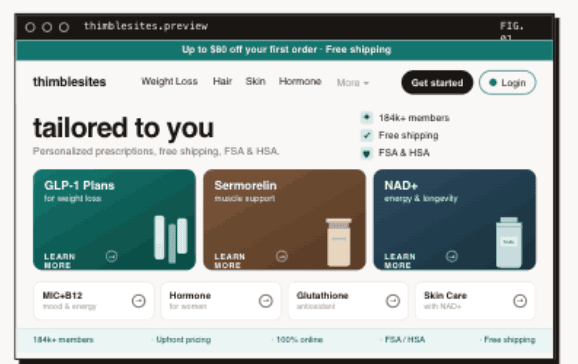
Neither sleep nor gut health requires any platform engineering changes. The prescription commerce pipeline handles both verticals through configuration:
- Intake: Configure new questionnaires for sleep history (Pittsburgh Sleep Quality Index or custom) and gut health symptoms. Same form infrastructure.
- Provider encounter: Same async or synchronous telehealth encounter. Providers review intake and prescribe trazodone, hydroxyzine, or LDN based on clinical protocol.
- Pharmacy routing: Trazodone and hydroxyzine route to retail pharmacy (generic tablets). LDN routes to compounding pharmacy (custom dose). Same routing engine, different destination.
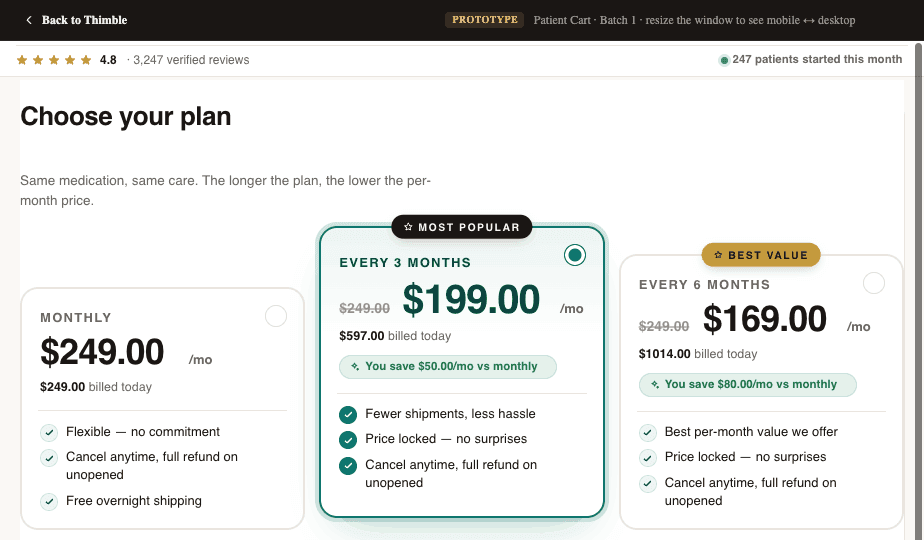
- Billing: Same Stripe subscription. Same refill cycles. Same payment recovery automation.
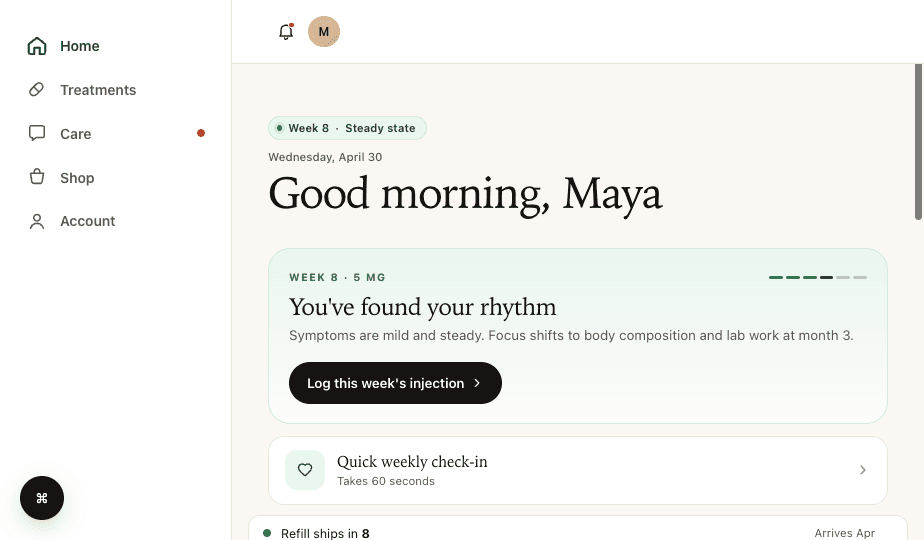
- Patient portal: Same white-label portal. Sleep patients track sleep quality. LDN patients track symptom improvements. Same infrastructure, different data points.
- Refill automation: 30-day refill cycles for both. Same automation engine triggers pharmacy dispatch, payment processing, and provider check-ins.
Unit Economics
Sleep Medicine
- Average subscription: $30-60/month (Rx + digital CBT-I + OTC bundle)
- Cost of goods: $5-15/month (generic medication is very cheap)
- Provider cost: $8-15 per async review
- Customer acquisition cost: $50-150 (lower than men's health due to less advertising competition)
- Average lifetime: 6-18 months
- Gross margin: 55-70%
Gut Health / LDN
- Average subscription: $40-80/month (compounded LDN + supplements)
- Cost of goods: $12-25/month (compounding is more expensive than generic tablets)
- Provider cost: $10-20 per review
- Customer acquisition cost: $100-250 (functional medicine audiences are engaged but niche)
- Average lifetime: 12-36 months (patients who respond to LDN stay on long-term)
- Gross margin: 45-60%
Launch Strategy: Adjacency, Not Standalone
The strongest play for sleep and gut health is as adjacencies to an existing brand, not standalone verticals. A GLP-1 brand adds a sleep product line. A menopause brand adds LDN for inflammation. A longevity brand adds both as part of a comprehensive health optimization program.
Cross-selling to existing patients has dramatically lower acquisition costs than building a standalone sleep or gut health brand from scratch. Your existing patients already trust your brand, have payment methods on file, and are engaged with your portal. Adding a $40/month sleep subscription to a $200/month GLP-1 patient is a 20% LTV increase with near-zero acquisition cost.
Frequently Asked Questions
- Is trazodone a controlled substance?
- No. Trazodone is a non-controlled prescription medication. It is FDA-approved for depression and widely prescribed off-label for insomnia (it is the most commonly prescribed sleep medication in the US with approximately 25 million prescriptions per year per 2023 ClinCalc data). It can be prescribed via asynchronous or synchronous telehealth in all states.
- Does low-dose naltrexone DTC require a compounding pharmacy?
- Yes. Standard naltrexone tablets are 50mg. Low-dose naltrexone DTC (1.5-4.5mg) must be compounded by a 503A pharmacy. This is the same compounding infrastructure used for GLP-1s, HRT, and prescription skincare. If your platform already routes to compounding pharmacies, LDN telehealth is a configuration addition, not an engineering project.
- Can I add sleep or gut health to an existing DTC brand?
- Yes, and this is the recommended approach. Both verticals work best as adjacencies to an existing brand (GLP-1, menopause, longevity). Cross-selling to existing patients has near-zero acquisition cost and increases per-patient LTV by 15-25%.
- Is there a dominant DTC sleep brand?
- No. As of 2026, there is no dominant DTC sleep prescriptions brand. Hims has melatonin products. Big Health offers digital CBT-I. Pear Therapeutics tried prescription digital therapeutics for insomnia and went bankrupt. The field is open for a focused DTC sleep prescriptions brand built on proper infrastructure.
- What evidence supports off-label LDN for gut health?
- Over 100 published studies examine LDN for various conditions including Crohn's disease, IBS, fibromyalgia, and autoimmune conditions. While LDN does not have FDA approval for these indications (the drug is off-patent with no commercial sponsor for clinical trials), the evidence base is growing and LDN is widely prescribed in functional and integrative medicine.
Building a telehealth brand?
Thimble Hub gives you the checkout, intake, patient portal, and EHR-routing infrastructure so you can launch in weeks, not quarters. Modular, HIPAA-ready, no lock-in.