
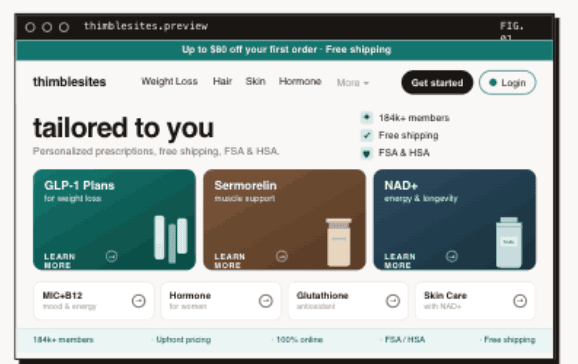

When a PE firm acquires three DTC telehealth brands, it inherits three separate technology stacks. Three different patient portals. Three different billing systems. Three different pharmacy integrations. Three engineering teams maintaining three sets of infrastructure that do functionally the same thing.
The PE telehealth roll-up consolidation math is obvious. The execution is not. Migrating three brands onto a shared platform without disrupting patients, breaking pharmacy relationships, or losing subscription continuity is operationally complex. PE-backed roll-ups typically spend many months and significant capital on platform consolidation after acquisition.
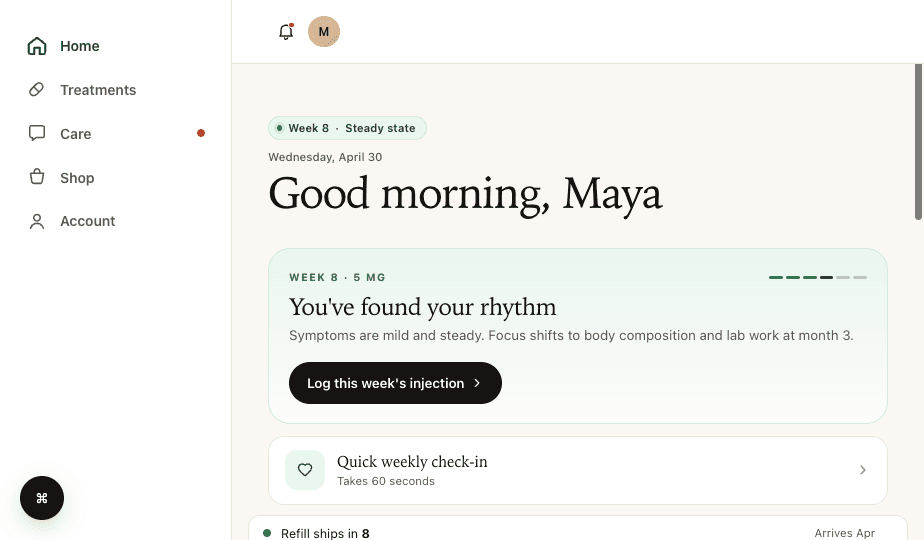
A multi-brand telehealth platform eliminates this problem. Each brand runs on the same infrastructure with its own white-label portal, its own domain, its own Stripe account, and its own pharmacy routing rules. For MSO telehealth infrastructure specifically, this means a single compliance and security posture covering every clinic brand without cross-contaminating patient data. Shared infrastructure, separate identities, consolidated analytics.
Who Needs Multi-Brand Telehealth Infrastructure
Private Equity Roll-Ups
Warburg Pincus, KKR, TPG, and other healthcare PE firms are actively evaluating DTC telehealth acquisitions. Distressed valuations after the 2022-2023 correction (Cerebral sharply down from its peak valuation, Ro facing pressure after its peak $7B raise, multiple failures) have created buying opportunities. But every acquisition adds another technology stack to manage.
LifeMD (NASDAQ: LFMD) demonstrates the multi-brand model: ShapiroMD, RexMD, NavaMD, and others running under one corporate umbrella. Thirty Madison built Keeps, Cove, and Picnic internally, and acquired Nurx externally. The brands stay separate. The infrastructure should be shared.
Management Service Organizations (MSOs)
MSOs manage the business operations of multiple clinics or telehealth practices. They handle billing, compliance, marketing, and technology while the clinical entities focus on patient care. MSO telehealth infrastructure has to serve each clinic as an independent brand while giving the MSO consolidated visibility. An MSO managing five functional medicine clinics across three states needs a multi-brand telehealth platform where each clinic has its own portal but the MSO sees the full picture.
Multi-Vertical DTC Operators
A single operator running a men's health brand, a women's HRT brand, and a longevity brand. Different brand names, different audiences, different marketing. Same prescription commerce pipeline underneath. Each brand should feel independent to the patient while sharing provider networks, pharmacy relationships, and operational infrastructure.
What Multi-Tenant Architecture Actually Means
- Separate brand identities: Each brand gets its own domain, logo, color scheme, email sender, and patient-facing experience. Patients interact with 'Brand A' and never see 'Brand B' or the platform vendor.
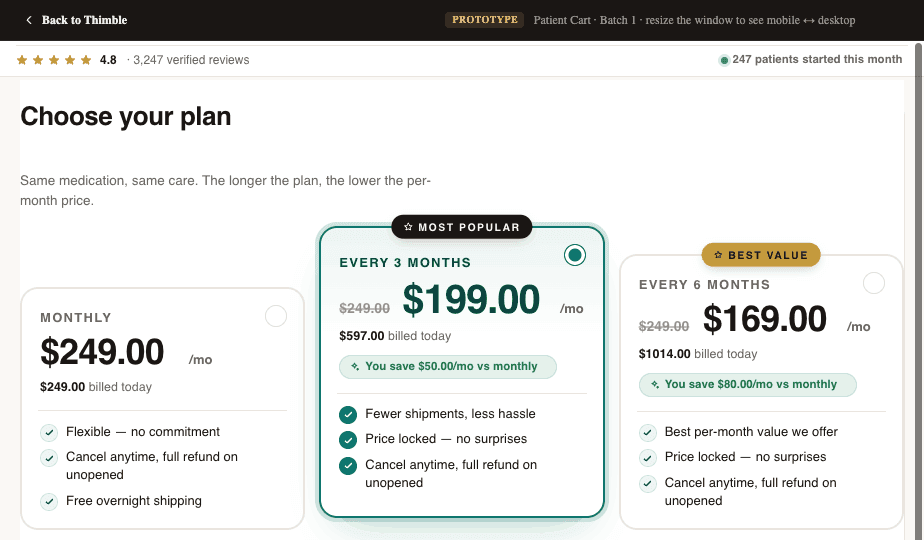
- Per-brand Stripe Connect accounts: Each brand processes payments through its own Stripe account. Revenue attribution, subscription management, and financial reporting are isolated per brand. The parent entity has consolidated reporting across all brands.
- Shared provider network: Licensed providers can serve multiple brands. A provider credentialed in 15 states can see patients from any brand operating in those states. Provider utilization improves because demand is pooled across brands.
- Configurable pharmacy routing per brand: Brand A routes prescriptions to Pharmacy X for compounded HRT. Brand B routes to Pharmacy Y for skincare. Brand C uses both. Each brand has its own routing rules.
- Field-level data isolation: Patient data is encrypted per-company using AES-256-GCM. Brand A's patients are cryptographically isolated from Brand B's patients. An MSO admin can see aggregated metrics across brands but cannot see individual patient PHI from a brand they don't manage.
- Consolidated analytics: The parent entity gets cross-brand dashboards: total MRR, churn by brand, provider performance across brands, acquisition channel comparison. Individual brand managers see only their brand's data.
- Shared automation templates: Build an onboarding sequence once and deploy it across brands with brand-specific messaging. Shared best practices, brand-specific execution.
The PE Telehealth Roll-Up Consolidation Playbook
- 01.Acquire brands, not technology. The target's custom tech stack is a liability, not an asset. Evaluate the brand equity, patient base, and unit economics. Plan to migrate the patients off the custom stack onto shared infrastructure.
- 02.Migrate one brand at a time. Start with the smallest or newest brand. Configure it on the multi-tenant platform. Validate the full pipeline (intake, provider, pharmacy, portal, refill). Then migrate the next.
- 03.Maintain subscription continuity. Per-brand Stripe accounts mean patient payment methods transfer cleanly. The patient keeps the same billing relationship. No re-entry of credit cards. No subscription gap.
- 04.Consolidate the provider network. If Brand A has providers in 20 states and Brand B has providers in 15 states (with 10 overlapping), the consolidated network covers 25 states. Provider utilization improves across the portfolio.
- 05.Sunset the custom stacks. As each brand migrates, the custom engineering team shrinks. The platform handles infrastructure. The remaining team focuses on brand-specific clinical protocols and marketing.
The Financial Case for Shared Infrastructure
- Engineering headcount reduction: Three brands with custom stacks require 3 engineering teams (minimum 5-8 engineers each, $1-2M/year each). Shared infrastructure requires zero dedicated engineers per brand. Platform costs replace engineering salaries at a fraction of the expense.
- Faster time-to-launch for new brands: A PE firm that acquires a patient base and brand name can launch it on the platform in weeks. No 12-month build cycle. The platform already has intake, billing, pharmacy routing, and the portal.
- Improved provider utilization: Pooling demand across brands means providers see more patients per hour. A dermatology provider reviewing skincare intakes for Brand A can also review for Brand B. Utilization improves without adding provider headcount.
- Cross-brand learning: Automation sequences that drive retention in Brand A can be tested across Brand B and C. Pricing experiments, intake flow optimizations, and communication cadences compound across the portfolio.
- Valuation multiple improvement: Usage-based revenue (per-Rx processed, per-patient) on top of SaaS fees changes the valuation from flat-fee SaaS to usage-based infrastructure. This is the single highest-impact valuation lever for PE-backed telehealth portfolios.
Stripe Connect: The Financial Architecture
Thimble Portal's multi-tenant billing runs on Stripe Connect, which is specifically designed for marketplace and multi-vendor models. Each brand gets its own connected Stripe account. The parent entity (PE firm, MSO) can configure platform fees, revenue splits, and consolidated reporting.
- Per-brand Stripe dashboards with independent financial reporting
- Configurable platform fees (the parent entity takes a percentage of each brand's transactions)
- Consolidated cross-brand financial reporting for the parent entity
- Independent subscription management per brand (each brand's patients are billed separately)
- If a brand is sold or spun out, its Stripe account goes with it. Clean separation.
Security and Compliance for Multi-Brand
- Field-level encryption per company: AES-256-GCM encryption ensures that Brand A's patient data is cryptographically isolated from Brand B. Even database-level access cannot expose cross-brand PHI.
- Role-based access across brands: 4-tier role hierarchy. A parent entity admin can see aggregated metrics across brands but cannot access individual patient records without brand-level authorization.
- Per-brand BAAs: Business Associate Agreements are issued per brand entity, ensuring HIPAA compliance for each legal entity in the portfolio.
- Six-year audit trails per brand: Immutable audit logs are maintained separately per brand, meeting HIPAA retention requirements independently for each entity.
- SOC 2 Ready: The shared platform is built to SOC 2 Ready standards. Individual brands inherit the platform's compliance posture and controls, reducing per-brand compliance overhead.
Frequently Asked Questions
- Can multiple brands run on the same platform without patients seeing each other's data?
- Yes. Field-level AES-256-GCM encryption ensures cryptographic isolation between brands. Patients of Brand A cannot see Brand B's data even at the database level. Each brand has its own domain, portal, and Stripe account. The patient experience is completely independent per brand.
- How long does it take to migrate a brand onto the platform?
- Typically 2-4 weeks per brand. Week 1: configure the brand's portal, intake flows, and pharmacy routing. Week 2: migrate patient data and subscription billing. Week 3: run in parallel with the old system. Week 4: full cutover. Stripe subscription continuity means patients don't need to re-enter payment information.
- Can a PE telehealth roll-up see consolidated metrics across all portfolio brands?
- Yes. Parent entity admins get cross-brand dashboards showing total MRR, churn by brand, provider performance, acquisition channel comparison, and financial reporting. Individual brand managers see only their brand's data. Access controls are role-based with 4-tier hierarchy. This is the core reason PE telehealth roll-up teams choose a multi-brand telehealth platform over maintaining separate stacks: the consolidated view exists on day one, not after 18 months of engineering.
- What happens if we sell one of the brands in the portfolio?
- Clean separation. The brand's Stripe account, patient data, and portal configuration are independent. When a brand is divested, its Stripe account and data export go with it. The remaining brands continue operating on the platform without disruption.
- How does provider sharing work across brands?
- Providers credentialed on the platform can be assigned to multiple brands. A dermatology provider licensed in 20 states can review intakes for a skincare brand and a men's health brand simultaneously. Demand pooling across brands improves provider utilization and reduces per-encounter costs.
Building a telehealth brand?
Thimble Hub gives you the checkout, intake, patient portal, and EHR-routing infrastructure so you can launch in weeks, not quarters. Modular, HIPAA-ready, no lock-in.